
This post may contain affiliate links. We earn commissions when you shop through the links below at no additional cost to you.
The commissions we receive help continue to run this site.
Affiliate Disclosure
At some point in the distant past, a group of humans looked up at the sky during a thunderstorm and collectively decided: “Yeahp. That’s definitely a god.”
No, not weather patterns.
Not atmospheric pressure.
And definitely not electricity moving through the clouds.
A god. Probably angry. Possibly throwing something.
And honestly? Given the information they had at the time…that’s a pretty reasonable conclusion.
Before telescopes, satellites, and people on the internet explaining things badly, humanity had exactly two tools for making sense of the universe: curiosity and storytelling. When the world didn’t make sense, we filled the gaps with epic tales about gods, monsters, heroes, tricksters, and the occasional supernatural being who existed purely to make everyone else’s life more complicated.
Mythology is what happened next.
Across every culture on Earth, people invented stories to explain the strange, terrifying, and beautiful forces shaping their lives. Storms were divine temper tantrums. The changing seasons might be caused by a goddess with seasonal depression. Volcanoes? Obviously the forge of an irritable fire god deep underground.
Was it scientifically accurate?
No!
Was it imaginative, dramatic, and wildly entertaining?
Absolutely!
In fact, many a mythology around the world reads nothing like sacred texts and more like ancient cosmic soap operas. Gods cheat on each other. Heroes make terrible decisions. Tricksters cause chaos simply because it seems like a fun Tuesday activity. Entire civilizations hinge on prophecies that someone probably should have ignored.
And yet, beneath all the inbreeding and drama, mythology reveals something surprisingly profound.
These stories were humanity’s first attempt to answer the biggest questions we’ve ever asked:
Where did we come from?
Why do bad things happen?
What happens after we die?
And why – WHY – does the universe sometimes feel like it’s actively messing with us?
Think of this guide as a storyteller’s roadmap to gods, monsters, and the very weird ways humans explain the universe.
We’ll travel across continents and centuries to explore the mythologies that shaped entire civilizations. From thunder-wielding gods of the Norse world to the complex cosmic cycles of Hindu tradition. From Egyptian journeys through the afterlife to trickster spirits lurking in folklore across the globe.
Mythology around the world isn’t just about ancient stories carved into stone tablets.
These myths shaped cultures, inspired religions, influence literature, and still echo today in everything from fantasy novels to blockbuster movies. Even thousands of years later, we’re still retelling the same stories… just with slightly better special effects.
So if you’ve ever wondered why dragons appear everywhere, why tricksters love ruining perfectly good plans, or why so many cultures believe the world would end in spectacularly chaotic fashion, I have good news for you! Humanity has spent thousands of years trying to answer those very questions.
- What Actually Counts As Mythology?
- Why Every Culture Invented Gods
- The Major Mythological Traditions Around The World
- The Monsters of World Mythology
- Mythological Heroes and Epic Quests
- Mythology and Real Geography
- Mythology’s Influence On Modern Culture
- The Dark Side of Mythology
- The Weirdest Myths Ever Told
- Why Mythology Around The World Still Matters
What Actually Counts As Mythology?
Before we go any further, it’s worth clarifying what we mean when we talk about mythology. The word is often used as a catch-all term for just about any old story involving a supernatural creature.
So if you’d like to take a little side quest, or want some more information about the difference between myths, legends, folklore, and fables, you can head on over to another blog post I’ve written about that very thing!
Why Every Culture Invented Gods
Once humans began telling stories to explain the world around them, something interesting started happening.
The forces of nature slowly started developing personalities.
Thunderstorms became the work of powerful sky gods.
Oceans were ruled by moody sea deities.
The sun and moon often became divine figures guiding the rhythm of life on Earth.
This wasn’t random. Giving natural forces personalities made them easier to understand.
A storm caused by atmospheric instability is complicated.
A storm caused by an angry thunder god? Now that is a story you can remember!
Across cultures, this process produced a surprising number of similarities in mythological traditions around the world.
Many civilizations independently developed remarkably similar types of deities:
– Sky gods associated witih lightning and storms
– Sun deities representing life, light, and order
– Earth or mother goddesses connected to fertility and nature
– Underworld rulers overseeing death and the afterlife
– Trickster figures whose primary job appears to be causing chaos
These archetypes appear again and again, even in cultures that had no contact with one another geographically, or by time.
Humans consistently created gods who represented the forces that shaped their lives most dramatically. The sun, storms, oceans, death, fertility, and the unpredictable twists of fate.
In other words, mythology wasn’t just about imagination.
It was about survival, curiosity, and the very human need to turn a confusing universe into something that could be understood through story.
And once those stories began to spread, they grew into the vast and fascinating mythological traditions we’re about to explore.
The Major Mythological Traditions Around The World
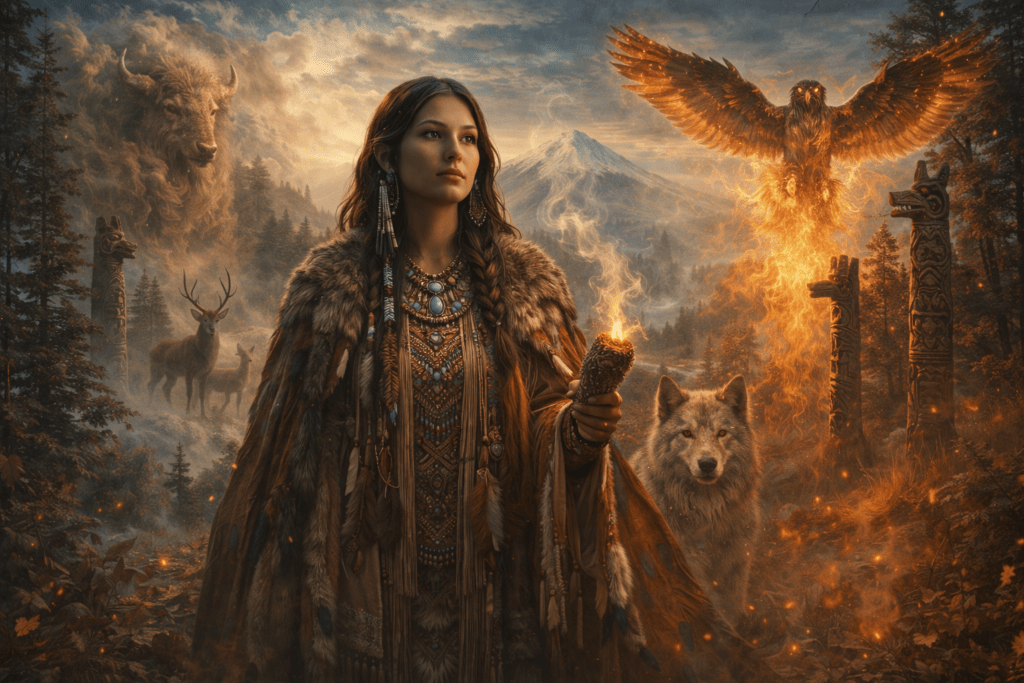
If mythology around the world tells us anything about humanity, it’s this: no matter where people lived or what language they spoke, they all eventually looked at the world and decided that supernatural beings were probably involved somehow.
Different cultures imagined differen divine personalities, different monsters, and wildly different cosmic rules, but the impulse was the same everywhere. People created stories to explain what they came from, why the world behaved the way it did, and who – or what – might be running the show behind the scenes.
The result is a stunning range of mythological traditions, each shaped by geography, climate, cultural values, and centuries of storytelling. If you’re looking for DRAMATIC AF – we got some! If you are biased towards philosophical, it’s definitely there. Some are just downright chaotic enough to make modern reality television look calm and well-adjusted.
Greek Mythology
If you’ve never read Greek mythology before, allow me to set expectations appropriately.
Greek myths are essentially a divine soap opera complete with inbreeding, lightning bolts, and maybe a rave.
The ancient Greeks populated their world with gods who were powerful, dramatic, and emotion. And of course, we can’t forget: spectacularly bad at making responsible life choices. The Olympian gods lived atop Mount Olympus and spent a surprising amount of time interfering in human affairs,. They argued with one another, and occasionally transformed people into animals, plants, or unfortunate geological features.
At the center of this mythological universe sits Zeus, king of the gods and wielder of thunderbolts. Zeus ruled the heavens, controlled storms, and had an alarming tendency to fall in love with just about everyone he met – attachment issues, anyone? – which often led to a long chain of complicated divine family drama. (And yes, we’re going to say family drama, because at the end of the day, most of the Greek gods are related to each other. Thanks, Zeus.)
His siblings helped round out the divine power structure. Poseidon ruled the seas, earthquakes, and horses, while Hades governed the underworld, presiding over the realm of the dead with a reputation that was far scarier than his actual personality probably warranted.
Meanwhile, goddesses like Athena, Artmeis, Aphrodite, and Hera represented everything from wisdom and war strategy to love, the hunt, and divine authority.
Of course, gods were only half the story!
Greek mythology also introduced some of the most famous monsters and heroes ever imagined. Creatures like the Minotaur, Medusa, and the multi-headed Hydra terrorized unlucky travelers, while heroes like Hercules, Perseus, and Odysseus embarked on legendary quests filled with trials, monsters, prophecies, and the occasional divine intervention.
These myths weren’t just entertaining stories. They explored themes of power, fate, hubris, loyalty, and the consequences of angering beings who could throw lightning bolts on a bad day.
And if there is one consistent lesson Greek mythology teaches us, it’s this:
Never assume the gods aren’t paying attention. They probably are. And they are very easily offended.
Norse Mythology
If you’ve never read Norse mythology, it feels like a heavy metal album cover that somehow became a religion.
The myths of the Norse world developed in the harsh landscapes of Scandinavia, where long winters, powerful storms, and. unforgiving seas shaped the worldview of the people who told these stories.
The universe is structured around Yggdrasil, an enormous cosmic tree that connects nine realms. These realms include the world of humans (Midgard), the land of the gods (Asgard), the icy wildnerness of giants (Jotunheim), and several other mystical territories scattered across the branches of the great world tree.
At the center of this mythological universe stands Odin, the All-Father.
Odin is not your typical all-powerful god. He’s a wanderer, a seeker of knowledge, and someone who sacrificed one of his own eyes in exchange for wisdom. He spends much of his time traveling the worlds in disguise, gathering secrets about fate, magic, and the coming end of the world.
And yes, in Norse mythology, the end of the world is definitely on the calendar.
It’s called Ragnarök, and it involves a series of catastrophic battles, monstrous creatures, collapsing realms, and the eventual destruction and rebirth of the cosmos.
I didn’t lie, right? HEAVY METAL.
Other Norse gods bring their own brand of chaos and strength to the mythology. Thor, the thunder god, protects humanity with his legendary Mjölnir, smashing giants and monsters with impressive enthusiasm. Meanwhile, Loki, infamous trickster and shapeshifter, spends much of his time creating problems that everyone else has to solve. (In one particularly bizarre story, he even gives birth to an eight-legged horse. Mythology is full of surprises like that.)
What makes Norse mythology especially fascinating is its acceptance of fate. The gods know Ragnarök is coming. They know the battles will be brutal. And they face that future anyway, with courage and defiance.
In other words, it isn’t just dramatic, it’s unapologetically epic.
Egyptian Mythology
If you are unfamiliar with Egyptian Mythology, they are deeply concerned wtih the logistics of death above all else.
The ancient Egyptians were fascinated by the afterlife. Not in a vague philosophical snese, either. In a very practical, and extremely organized way. They developed elaborate beliefs about what happened after death, how souls were judged, and what steps needed to be taken to ensure a smooth transition into eternity.
And if you think modern bureaucracy is complicated, just wait until you see the Egyptian version of the afterlife.
The journey after death involved a complex process overseen by several powerful deities. The god Aubis, easily recognizeable by his jackal head, guided souls through the underworld and prepared them for judgment.
At the center of this judgment was one of the most famous scenes in ancient mythology: the weighing of the heart.
In this ceremony, a person’s heart (believed to contain their thoughts and deeds) was placed on a sacle and weight against the feather of Ma’at, the goddess representing truth and cosmic balance. If the heart was lighter than the feather, the soul was deemed worthy of entering the afterlife.
If not… welp. Things got unpleasant. And quickly.
The heart would be devoured by Ammit, a fearsome creature part lion, part crocodile, and part hippopotamus. Suffice it to say, failing the afterlife test was not exactly ideal.
The Egyptian pantheon also included powerful and beloved deities such as Ra, the sun god who sailed across the sky each day, and Osiris, the god of the afterlife who symbolized ressurection and rebirth. His story (betrayed and murdered by his brother Set, then resurrected through the magic of his wife Isis) became one of the most influential myths in Egyptian culture.
These stories shaped Egyptian religion, architecture, and burial traditions for thousands of years. Tombs were filled with spells, instructions, and magical texts designed to guide souls safely through the underworld.
To the ancient Egyptians, death wasn’t the end of the story. It was simply the next chapter.
Japanese Mythology
Japanese mythology might contain some of the weirdest supernatural creatures on Earth – and that’s absolutely part of the charm.
Rooted largely in the Shinto tradition, Japanese mythology centers around kami, spiritual beings that inhabit the natural world. Kami can be powerful deities, ancestral spirits, or even the spiritual essence of mountains, rivers, trees, and other elements of nature.
In other words, the world itself is alive.
Among the most important figures in Japanese mythology is Amaterasu, the sun goddess and one of the most revered deities in the Shinto pantheon. According to legend, Amaterasu once hid herself inside a cave after a dispute with her chaotic brother Susanoo, plunging the world into darkness until the other gods devised an elaborate plan to lure her back out.
This story, like many in Japanese mythology, blends humor, drama, and cosmic stakes in equal measure.
But, if Japanese mythology is known for anything, it’s the staggering variety of supernatural beings known as yōkai.
Yōkai range from mischievous tricksters to genuinely terrifying creatures, and many of them are delightfully strange. There are fox spirits called kitsune that can shape shift into humans, umbrella spirits known as karakasa-obake that hop around on a single leg, and river-dwelling creatures called kappa that can either help or drown unsuspecting travelers depending on their mood.
This mythological tradition feels imaginative, unpredictable, and occasionally a little surreal. Japanese mythology embraces the idea that the world is full of unseen spirits, and some of them might be watching you right now.
(Go ahead. Look behind you. Double check.)
If you ever find yourself wandering through a quiet forest in Japan, it might be wise to mind your manners.
You never know which kami, or maybe even a yōkai, might be nearby.
Hindu Mythology
Hindu mythology is something very different. It’s part of a living religious tradition practiced by more than a billion people today.
Because of this, Hindu mythology occupies a unique space in the world of mythology. These stories are not simply relics of ancient cultures; they continue to shape spiritual beliefs, rituals, and philosophical ideas across South Asia and beyond.
At the heart of Hindu cosmology lies an expansive and intricate universe filled with gods, avatars, cosmic cycles, and epic narratives that stretch across thousands of years.
The Hindu pantheon includes powerful deities such as Brahma, the creator; Vishnu, the preserve of the universe; and Shiva, the destroyer and transformer. Together, these figures represent the ongoing cycle of creation, preservation, and destruction that governs existence itself.
One of the most fascinating aspects of Hindu mythology is the concept of avatars, in which gods take physical form to restore balance to the world. Vishnu alone is believed to have appear in multiple avatars, including the heroic prince Rama and the beloved deity Krishna, whose stories form the backbone of some of the most improtant Hindu epics.
Two of those epics – the Ramayana and the Mahabharata – are among the longest and most influential works of literature ever written. These massive stories weave together themes of duty, morality, loyalty, warfare, and the complex responsibilities that come with power.
Rather than presenting a simple battle between good and evil, Hindu mythology often explores the deeper philosophical questions surrounding human behavior and the nature of reality itself.
In that sense, Hindu mythology functions not just as storytelling, but as a vast spiritual and philosophical framework. And one that continues to guide millions of people in their understanding of the world.
Indigenous Mythologies
While many people think of mythology in terms of ancient civilizations, some of the most profound mythological traditions in the world come from Indigenous cultures whose stories are deeply tied to land, memory, and community.
Indigenous mythologies exist across every inhabited continent, from the oral traditions of Native American nations to the Dreamtime stories of Aboriginal Australia, the spiritual cosmologies of African cultures, and the navigational legends of Polynesian seafarers.
What makes Indigenous mythologies distinct is the way they connect storytelling directly to the physical landscape.
Mountains, rivers, forests, and deserts are not simply geographic features, they are living elements of cultural memory. Stories explain how these landscapes were formed, who inhabits them spiritually, and how humans are meant to ineract with the world around them.
In many traditions, animals play a central role in mythology, often acting as teachers, messengers, or tricksters. Figures such as coyote, Raven, and Spider Woman appear across numerous Indigenous storytelling traditions, offering lessons about survival, balance, humility, and the consequences of arrogance.
(As an Indigenous woman, I grew up learning about some of these legends and stories. A personal favorite is about the Rainbow Crow. It’s about sacrifice and community, and I just love everything about the story, even though there are truly heartbreaking parts.)
These stories are not just entertainment. They serve as guides fro how communities live, travel, hunt, respect the environment, and understand their place within a larger web of life.
Because many Indigenous mythologies are passed down through oral storytelling traditions, they remain dynamic and evolving rather than frozen in ancient texts. Elders share these stories with younger generations, preserving cultural knowledge that might otherwise be lost.
In that sense, Indigenous mythologies are not just stories about the past. They are living traditions that continue to shape identity, culture, and community today.
The Monsters of World Mythology
If mythology teaches us anything, it’s that humans have always had a vivid imagination when it comes to the things that might try to eat us.
Across cultures and centuries, mythological monsters have appeared in every shape, size, and level of nightmare fuel imaginable. Some guard treasure or haunt forests. There are some that lurk beneath the ocean waiting for an unlucky sailor to pass overhead. Others simply exist to punish arrogant heroes who probably should have stayed home.
In many cases, these creatures weren’t just invented to scare people for fun. Monsters often represented real dangers that ancients societies faced every day.
Unpredictable oceans became sea serpents.
Dangerous wildnerness became man-eating beasts.
Dark forests became home to spirits that tested travelers.
And while the details vary from culture to culture, certain types of monsters show up again and again.
Dragons
Few mythological creatures are as widespread, or as beloved!, as dragons.
These legendary beasts appear in cultures across Europe, Asia, and the Middle East, thought they don’t always behave the same way. In European myths, dragons are typically enormous fire-breathing reptiles guarding treasure hoards and terrorizing villages until a brave hero inevitably shows up with a sword.
In many Asian traditions, however, dragons are powerful but benevolent creatures associated with wisdom, rain, and prosperity. Rather than hoarding gold, they often act as guardians of rivers, storms, and natural balance.
The details differ, but the underlying idea remains remarkably consistent: dragons are powerful, ancient, and not something you want to annoy.
Sea Monsters
The ocean has always been one of the most mysterious places on Earth, which naturally made it the perfect home for enormous mythical creatures.
Sailors throughout history have reported terrifying encounters with sea monsters lurking beneath the waves. Legends speak of the Kraken (a personal favorite of mine!), a massive creature said to rise from the depths and drag entire ships beneath the ocean.
Other traditions describe enormous serpents twisting through the sea, waiting for unsuspecting vessels to pass overhead. Some of these stories may have been exaggerated sightings of whales or giant squid – but – when you’re floating in the middle of the open ocean, even a slightly large fish can start to look suspicious.
Either way, the sea monster remains one of mythology’s most enduring symboles of the unknown.
Trickster Creatures and Shape-Shifters
Not all monsters rely on brute strength. Some prefer to cause trouble in far more creative ways.
Across many a mythology around the world, trickster spirits appear in countless forms. These beings are clever, unpredictable, and usually far more interested in chaos than destruction.
In Japanese folklore, fox spirits (kitsune we mentioned above!) can shapeshift into human form and play elaborate tricks on unsuspecting people. In many Native American traditions, figures like Coyote or Raven create mischief that often teaches important lessons about humiilty and survival.
Tricksters remind us that mythology isn’t always about good versus evil. Sometimes the most dangeous creature in the story is simply the one who enjoys stirring up trouble.
Creatures of the Underworld
Many mythologies also include terrifying creatures associated with death and the afterlife. These beings guard the boundaries between life and death, often ensuring that souls cannot easily escape the underworld.
Greek mythology famously includes Cerberus, the three-headed dog guarding the gates of Hades. In Egyptian mythology, the creature Ammit devours the hearts of those who fail the judgment of the dead. Other traditions feature shadowy spirits, demons, or monstrous gatekeepers whose job is to keep the living from wandering too far into the realm of the dead.
These creatures reinforce one of mythology’s oldest messages: some doors are not meant to be opened.
Mythological Heroes and Epic Quests
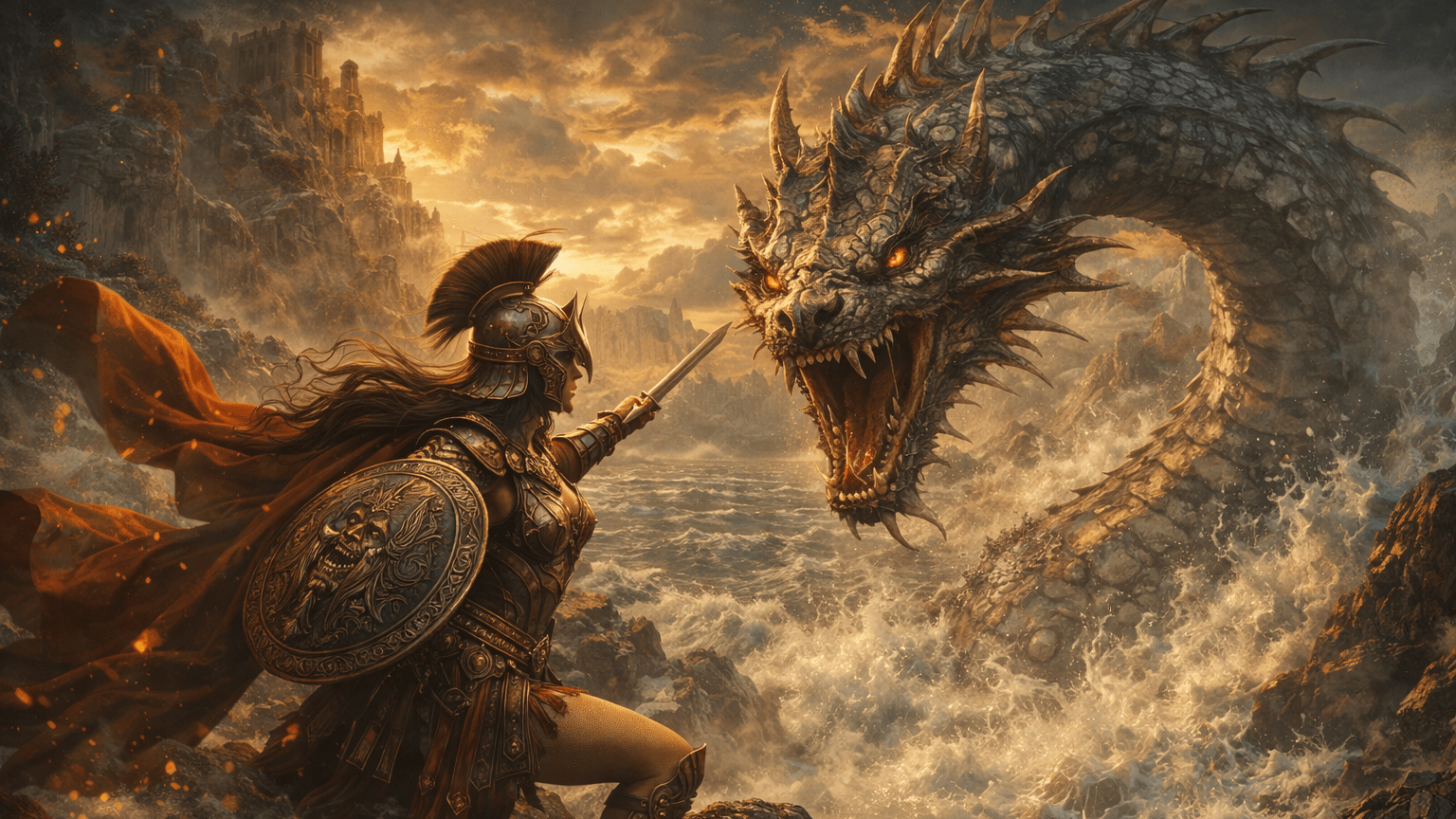
Of course, mythology wouldn’t be nearly as interesting if the monsters always won. For every terrifying creature lurking in the dark corners of mythological worlds, there is usually a hero brave – or very reckless – enough to confront it.
Mythological heroes appear in cultures across the globe, and while their stories vary wildly, they tend to share a few common traits.
Heroes are often:
– partially divine or blessed by the gods
– gift with unusual strength or intelligence
– deeply stubborn
– occasionally prone to making truly terrible decisions (which, in fairness, makes them extremely relatable)
Legendary Heroes Across Cultures
Many mythologies revolve around the adventures of larger-than-life heroes whose quests shape entire civilizations.
Greek mythology gave us Hrecules, famous for competing twelve impossible labors involving monsters, divine punishments, and feats of strength that would make modern Olympic athletes reconsider their career choices.
In ancient Mesopotamina mythology, the hero Gilgamesh embarked on a journey to discover the secret of immortality after confronting the realities of human mortality.
Chinese mythology celebrates the rebellious and immensely powerful Sun Wukong, the Monkey King, whose adventures combine humor, magic, and supernatural combat in equal measure.
Meanwhile, Polynesian mythology tells the story of Maui, a clever demigod who slows the sun, fishes islands from the ocean, and consistently pushes the boundaries of what even a hero should attempt.
Across cultures, heroes often represented the best, and sometimes worst!, of human nature.
The Hero’s Journey
One reason these stories feel so familiar across cultures is because many of them follow a similar narrative structure known as “The Hero’s Journey.”
In this storytelling pattern, a hero begins in an ordinary world before receiving a call to adventure. Along the way they encounter mentors, allies, and dangerous enemies before ultimately confronting a great challenge that transforms them.
The details may change from one myth to another, but the emotional arc remains remarkably consistent.
It’s the story of someone leaving the familiar, facing the unknown, and returning changed by the experience. It’s the same story humans have been telling for thousands of years.
And judging by the number of fantasy novels, blockbuster films, and epic video games still following the same structure today, it’s a story we’re not likely to stop telling anytime soon.
Mythology and Real Geography
One of the most fascinating things about mythology around the world is that many of these stories aren’t set in vague, imaginary worlds. They’re tied to real landscapes.
Mountains, rivers, caves, forests, and entire islands have been woven into mythological traditions for centuries. To the people telling these stories, these places weren’t just scenery. They were sacred, mysterious, and sometimes downright dangerous.
In other words, mythology often begins with someone looking at a particular place and thinking, “Something important definitely happened here.”
Sometimes, those places became homes of the gods. Sometimes they were entrances to the underworld. And occasionally, they were simply locations where strange things were rumored to happen. And those rumors were enough to inspire generations of storytelling.
Take Mount Olympus in Greece, for example. In Greek mythology, this towering mountain was believe to be the home of the Olympian gods. From its cloud-covered peaks, Zeus and the other deities supposedly watched over the world, occasionally intervening in human affairs when the mood struck them.
Whether the gods were actually there or not, the mountain itself became inseparable from the stories surrounding it.
Other mythological landscapes include places like Mount Fuji in Japan, which has long been associated with spiritual power and divine presence, or the River Ganges in India, a sacred river deeply intertwined with Hindu cosmology and ritual.
In South America, Lake Titicaca features prominently in Incan mythology as the birthplace of the sun and the origins of the Inca civilization itself.
Even in places where myths weren’t tied to specific deities, landscapes still shaped storytelling traditions. Deep forests became the homes of spirits. Deserts became testing grounds for heroes. Oceans became gateways to unknown worlds filled with monsters and mysteries. These stories remind us that mythology didn’t exist in isolation from the physical world.
It grew directly out of the places people lived.
And those places still carry the echoes of those stories today.
Mythology’s Influence On Modern Culture
If mythology feels ancient, it’s only because the stories themselves are old.
The ideas inside them are still very much alive.
In fact, modern culture is absolutely overflowing with mythological influences, sometimes so much we don’t even notice them anymore. The themes, archetypes, and characters from ancient myths continue to shape everything from literature and movies to video games and comic books.
Take modern superheroes, for example.
Characters like Thor, Wonder Woman, and even Superman follow storytelling patterns that feel strikingly similar to mythological heroes. They possess extraordinary abilities, face larger-than-life threats, and often struggle wtih the responsibilities that come with their power.
Sound familiar? (I mean, especially Thor, right out of Norse mythology.)
The same influence appears throughout modern storytelling. The hero’s journey, a narrative pattern identified by mythologist Joseph Campbell, forms the backbone of countless modern stories – from epic fantasy novels to blockbuster films like Star Wards and The Lord of the Rings.
Even many modern monsters and fantasy creatures have mythological roots. Dragons, shape-shifters, giants, and trickster spirits have all made their way from ancient folklore into contemporary entertainment.
Mythology can also show up in subtle ways.
Place names, constellations, cultural traditions, and even everyday expressions often trace their origins back to mythological stories. Entire fields of literature, art, and philosophy have drawn inspiration from mythology around the world.
And it makes sense when you think about it.
Mythology was humanity’s first great storytelling tradition. It shaped how cultures understood power, morality, fate, heroism, and the forces of nature.
And even thousands of years later, we’re still telling variations of those same stories!
We’ve just swapped the campfire for movie theaters, streaming platforms, and the occasional very intense online fandom debate.
But the core of the story? That part hasn’t changed at all.
The Dark Side of Mythology
For all the epic heroes and fascinating gods that populate mythology around the world, there’s another side to these stories that tends to get… a little darker.
Mythology, after all, wasn’t created purely for entertainment. These stories often emerged from societies trying to grapple with very real fears—war, famine, natural disasters, death, and the deeply unsettling realization that the universe doesn’t always behave the way we’d like it to.
And when ancient cultures told stories about those fears, they rarely held back.
Many myths include terrifying punishments for angering the gods. Others feature apocalyptic prophecies, monstrous creatures, or cautionary tales about what happens when humans get a little too ambitious.
Take Greek mythology, for example. The story of Prometheus—the Titan who stole fire from the gods and gave it to humanity—ends with Zeus chaining him to a rock, where an eagle eats his liver every day for eternity. The liver grows back each night so the process can start again the next morning.
Mythology does not mess around when it comes to consequences.
Other stories explore the destruction of entire civilizations. Flood myths appear in mythology around the world, from the Mesopotamian Epic of Gilgamesh to the biblical story of Noah and the flood traditions found in cultures across Asia and the Americas. In many of these tales, the world is wiped clean by catastrophic waters before being reborn again.
Then there are the darker underworld myths.
Ancient cultures often imagined elaborate afterlife systems where souls were judged, tested, or punished depending on how they lived their lives. Egyptian mythology famously includes the weighing of the heart, while Greek mythology describes eternal punishments for those who angered the gods, like Sisyphus. He was condemned to push a massive boulder uphill forever, only for it to roll back down every time he reached the top.
Which is honestly the most relatable metaphor for modern life anyone has ever invented.
In many ways, the darker side of mythology reflects a simple truth: ancient people were just as aware of life’s dangers and uncertainties as we are today.
The difference is that instead of writing philosophical essays about it, they created stories filled with monsters, curses, and divine punishment that made their point in a much more memorable way.
And when you explore mythology around the world, you quickly discover that nearly every culture developed its own version of these cautionary tales to remind people that the universe can be wondrous, mysterious, and occasionally terrifying all at once.
The Weirdest Myths Ever Told
Of course, mythology isn’t just dark and dramatic.
Sometimes it’s also wonderfully, gloriously weird.
Spend enough time exploring mythology around the world, and you’ll eventually encounter stories that make you pause, blink twice, and wonder if the ancient storyteller responsible for the tale might have been having a very strange day. (Or, was maybe very intoxicated.)
Consider Loki from Norse mythology. The trickster god is responsible for a long list of chaotic antics, but one of the strangest involves him transforming into a mare and eventually giving birth to an eight-legged horse named Sleipnir, which later becomes Odin’s legendary steed.
Mythology occasionally takes unexpected turns like that.
Greek mythology has its own collection of bizarre moments. Zeus, king of the gods, had a habit of transforming himself into animals in order to pursue various romantic adventures. Over the course of Greek myth, he appears as a swan, a bull, and – most famously – a shower of golden light.
If nothing else, Greek mythology teaches us that divine dating strategies were… creative.
Japanese mythology introduces a whole catalog of unusual supernatural beings known as yōkai. Among them are animated umbrellas that hop around on one leg, mischievous river creatures that challenge people to wrestling matches, and fox spirits that can shapeshift into humans to cause chaos or occasionally fall in love.
Meanwhile, in Hindu mythology, gods take on a stunning variety of avatars – appearing as humans, animals, and hybrid beings depending on what the cosmic situation requires.
And these are just a few examples.
Across mythology around the world, storytellers invented creatures with multiple heads, bodies made of fire, serpents large enough to encircle the planet, and spirits that inhabit everything from mountains to household objects.
Strange as they might seem today, these stories served an important purpose. They allowed people to explore the mysteries of existence, the unpredictability of nature, and the humor that sometimes emerges when humans try to make sense of a very complicated universe.
And if nothing else, they prove one very important point: human imagination has always been ridiculously unhinged.
Why Mythology Around The World Still Matters
If you’ve made it this far, congratulations! You’ve just taken a whirlwind tour through mythology around the world. You’ve met gods with questionable decision-making skills, monsters that definitely should not exist, heroes who thought fighting a hydra was a good career move, and tricksters who seem to wake up every morning thinking, “How can I make today just a little more chaotic?”
And yet, for all their strange creatures and dramatic divine family arguments, myths have endured for thousands of years for a simple reason:
They’re still telling us something about ourselves.
Across mythology around the world, the details change – different gods, different monsters, different landscapes – but the questions behind the stories remain remarkably similar.
Where did we come from?
Why does the world sometimes feel so unpredictable?
What happens after we die?
And why do humans keep making the same questionable decisions generation after generation?
Myths gave ancient cultures a way to wrestle with those questions. They turned thunderstorms into sky gods, oceans into the domain of powerful sea spirits, and the mysteries of life and death into stories that people could pass down around fires, through songs, and across centuries.
And honestly? We’re still doing the same thing today.
Modern storytelling – from novels and films to video games and entire cinematic universes – continues to draw inspiration from mythological themes. The hero’s journey, epic battles between order and chaos, shape-shifting tricksters, dragons guarding treasure… these ideas are woven so deeply into human storytelling that we sometimes forget where they came from.
They came from myths.
So whether you’re fascinated by ancient cultures, curious about legendary creatures, or simply enjoy a good story about a god throwing lightning bolts because someone offended him, the myths of the world remain one of humanity’s greatest storytelling traditions.
And if this journey through mythology around the world has sparked your curiosity, there’s plenty more strange, fascinating, and occasionally ridiculous folklore waiting to be explored.
You can find more stories about folklore, legends, and mythological oddities from across the globe HERE. (<- Link to more folklore/mythology posts!)
Because once you start exploring these stories, you’ll quickly discover something wonderful:
Human history may be complicated, mysterious, and sometimes downright bizarre…
…but at least we’ve always had excellent (and delightfully unhinged) stories about it.
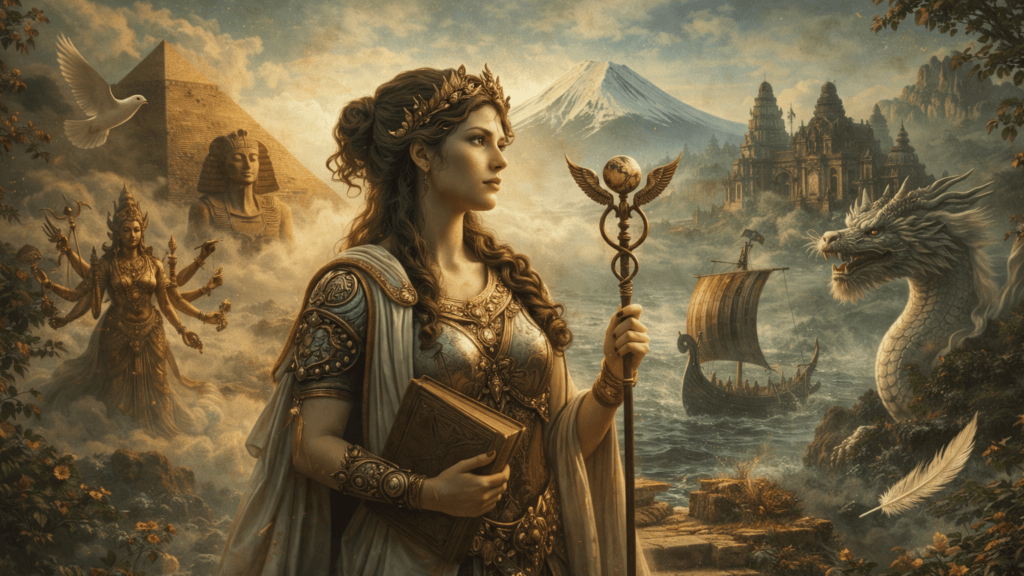
A guide to mythology around the world featuring gods, monsters, and epic legends that humans have been telling for thousands of years.